


Máquina de flexión de chapa metálica para automóviles: Guía completa para el comprador en fabricación de piezas de automóvil
La fabricación automovilística funciona con tolerancias estrictas. Unautomotive sheet metal bending machine must form body panels, Ménsulas estructurales, y refuerzos de chasis con ángulos exactos — de forma constante, a velocidad de producción, across thousands of cycles without drift. The wrong machine creates scrap, Reanudación, and costly production delays.
This guide breaks down the machine types, materiales, Especificaciones, and selection steps you need to make the right decision for automotive sheet metal work.
What Is an Automotive Sheet Metal Bending Machine?
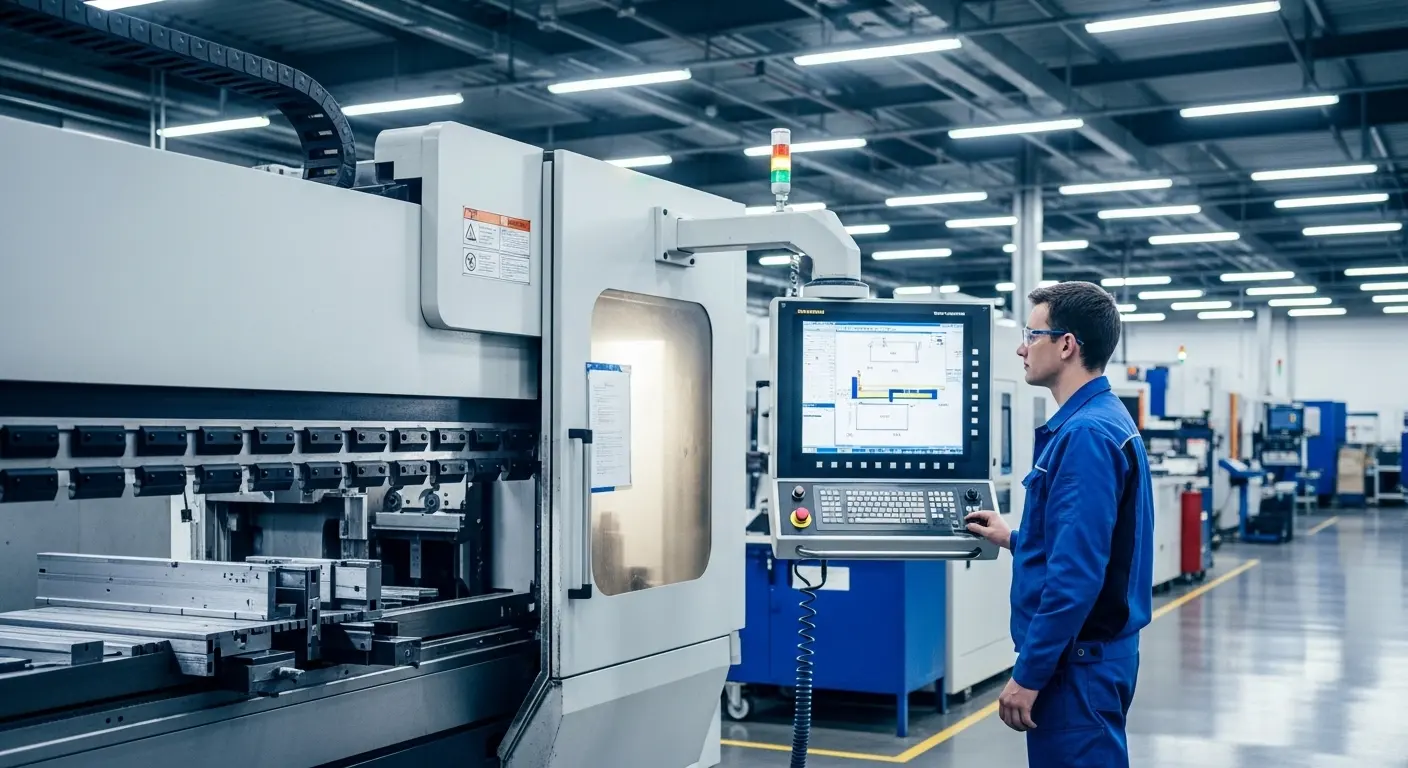
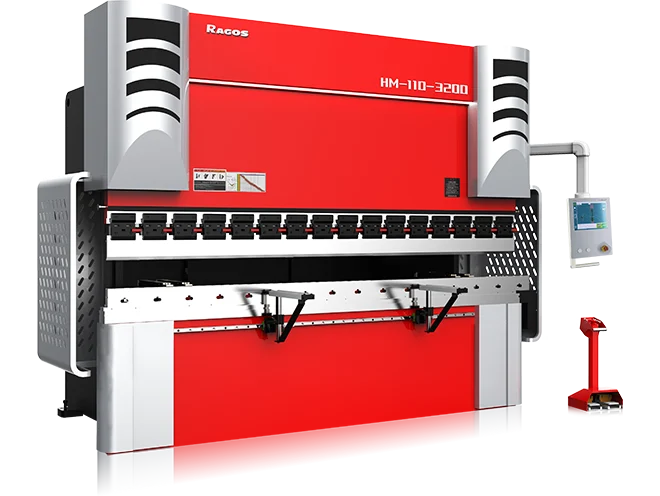
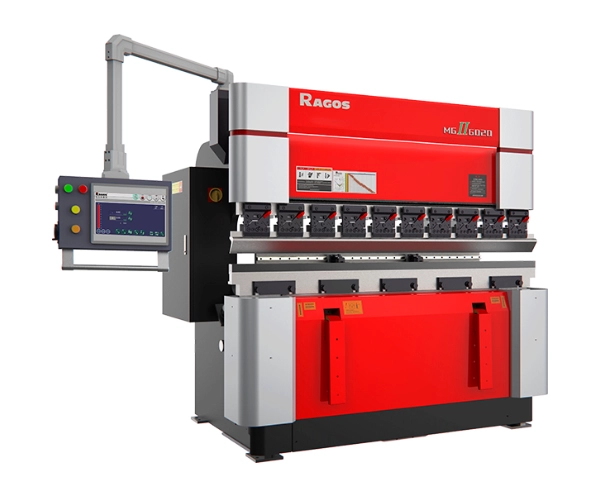
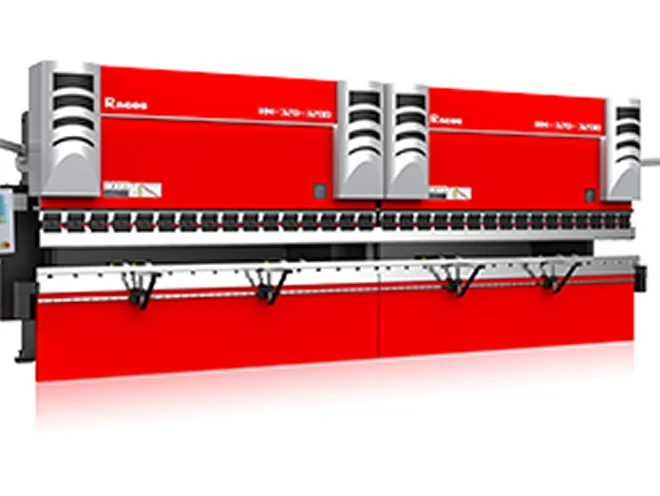
Unautomotive sheet metal bending machine is a press brake or panel bender designed to form flat metal sheet into precise angled or curved shapes used in vehicle manufacturing. It applies controlled force through a punch and die set to bend sheet metal to a specified angle, Radio, and geometry.
En la producción automovilística, these machines handle everything from thin aluminum body panels at 0.8 mm to heavy structural steel brackets at 6 mm or beyond. The machine must do this accurately and repeatedly — typically holding tolerances of ±0.3° or tighter on bend angle and ±0.1 mm on back gauge positioning.
The two main types used in automotive contexts are:
- Frenos de presión CNC — Versatile, programmable machines suited for brackets, Refuerzos, Marcos, y partes complejas de múltiples curvas
- Dobladores de paneles — Automated machines built for high-speed, large-panel production like door skins and roof panels
Both serve automotive production. The right choice depends on your part geometry, Volumen, and material mix — which this guide addresses in full.
Key Automotive Components Made with Sheet Metal Bending
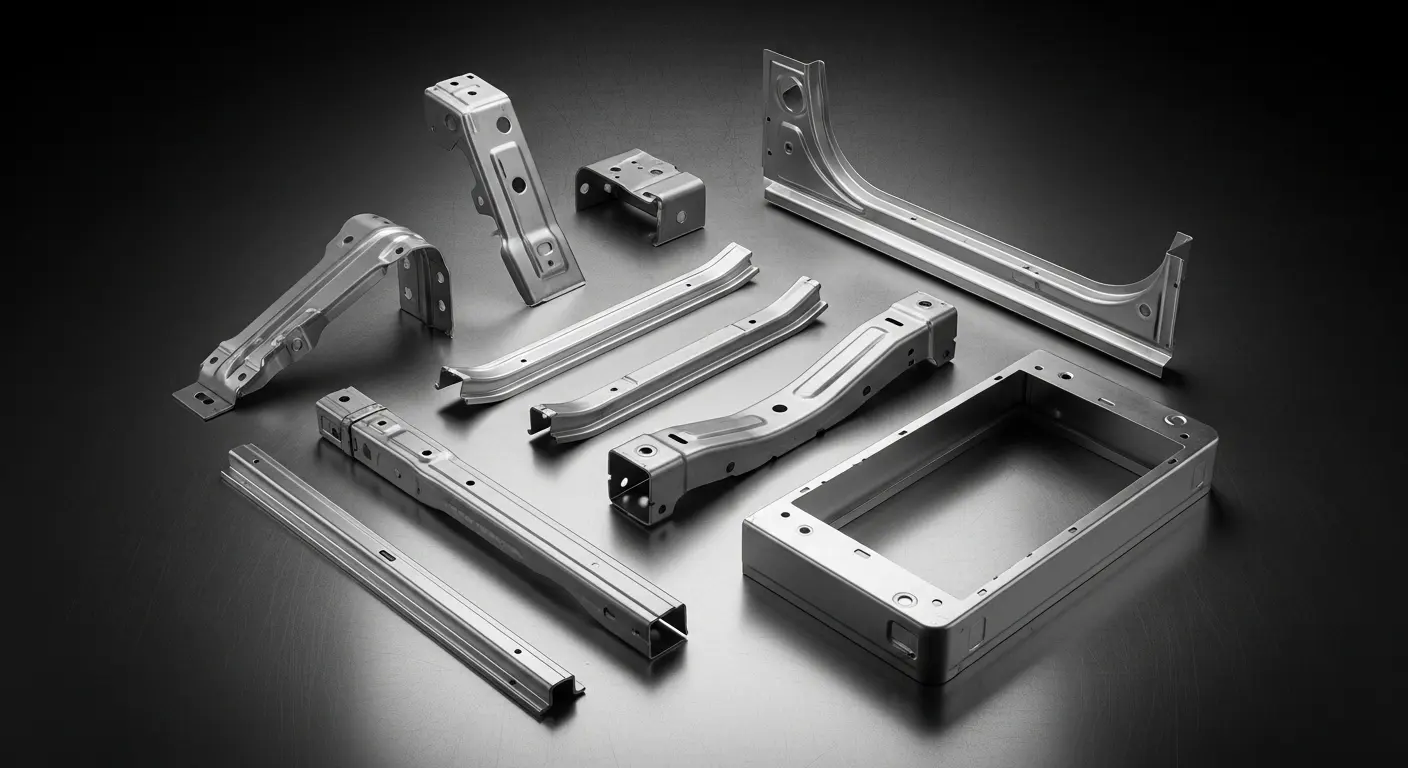
The range of parts an automotive sheet metal bending machine produces is broader than most buyers realize.
Paneles de carrocería — Doors, hoods, fenders, and roof panels. These require a high surface quality finish and precise flange angles for correct panel fit and weld gaps.
Structural brackets — Engine mounts, seat brackets, Refuerzos de suelo, and firewall supports. These parts need tight angular accuracy and often use Advanced High-Strength Steel (AHSS), which places significant demands on tonnage and spring-back correction.
Chassis and frame components — Cross-members, subframe brackets, and longitudinal profiles. Thicker material and longer bend lines require high-tonnage machines with crowning compensation.
Battery enclosures and trays — Increasingly common in electric vehicle production. These parts use aluminum sheet and require clean bend radii with no cracking or surface damage.
Exhaust and HVAC brackets — Stainless steel components with multiple tight bends and close tolerances.
In short, automotive fabrication spans nearly every combination of material, espesor, and complexity — which is why machine selection matters so much.
Automotive Sheet Metal: Materials and What They Demand
The material your shop bends most frequently shapes every specification decision for an automotive sheet metal bending machine. Automotive grades are not all the same, and each one behaves differently under the punch.
Acero dulce (DC01, DC04) — The baseline. Retroceso previsible, moderate tonnage requirements, works well across most CNC press brakes. Tensile strength typically 270–410 MPa.
Advanced High-Strength Steel (AHSS, DP, TRIP grades) — Used for structural and safety-critical parts. Tensile strength can exceed 1,000 MPa. Spring-back is aggressive and inconsistent — your machine needs a CNC controller with a spring-back compensation database or real-time angle feedback. Tonnage requirements are substantially higher than mild steel at the same thickness.
Aluminio (5xxx and 6xxx series) — Used for body panels, EV battery trays, and lightweight structural parts. Aluminum is softer but more prone to surface marking and cracking at tight radii. Paraaluminum bending settings and correct radius selection based on material grade, specific setup knowledge is essential before running production.
Galvanized and pre-coated steel — Common for exterior panels. The zinc coating is sensitive to tool pressure and sharp die edges. Softer tooling radii and proper die shoulder radius selection prevent coating damage.
The material mix your shop runs determines the minimum tonnage, the controller sophistication, and the tooling investment your automotive sheet metal bending machine requires.
Press Brake vs Panel Bender: Which Fits Automotive Work Better?
Both machine types play defined roles in automotive production. The question is which one matches your specific part type and volume.
| Característica | Plegadora CNC | Dobladora de paneles |
|---|---|---|
| Mejor tipo de pieza | Brackets, Marcos, complex multi-bend parts | Large flat panels, door skins, Recintos |
| Material range | 0.5 mm – 25 mm+ | Típicamente 0.5 mm – 3 mm |
| Velocidad de flexión | Moderate to fast | Muy rápido (automatizado) |
| Part geometry | Highly flexible | Optimized for panel shapes |
| Automatización | Opcional (Carga robótica) | Empotrado (suction cup, servo feed) |
| Operator input | Required for complex jobs | Minimal — mostly supervised |
| Costar | Lower to mid-range | Superior (automation built-in) |
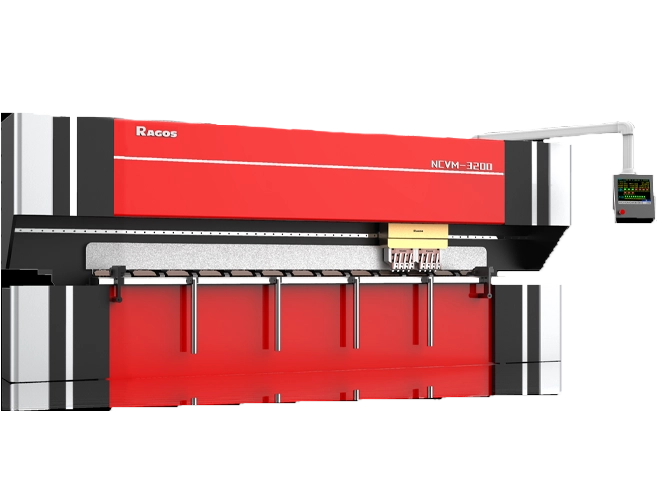
For most automotive job shops and Tier-2 suppliers, aMáquina de flexión CNC para frenos de prensa delivers the flexibility to handle multiple part families on one machine — essential when your job mix changes regularly.
For high-volume panel production, un dedicadoCurvador de paneles con alimentación CNC con ventosa removes the operator from the cycle and dramatically increases output per shift.
What to Look for in an Automotive Sheet Metal Bending Machine
Automotive production tolerances are tighter than general fabrication. When evaluating an automotive sheet metal bending machine, these are the specifications that matter most.
Tonnage with a safety margin — Calculate your maximum required force based on your thickest AHSS material, then add 20–30% capacity margin. Undersized machines wear faster and produce inconsistent bends under load. A100-ton CNC press brake for steel production is a common entry point for automotive bracket work.
Axis count — 4 minimum, 6+ para partes complejas — A 4-axis machine (Y1, Y2, X, R) handles most bracket and frame work. Parts with variable flange widths or stepped back gauge positions need Z1/Z2 axis control to automate finger positioning.
CNC controller with spring-back compensation — AHSS grades require real-time angle correction or a stored spring-back database. Controllers like Delem DA66S and DA69S handle this well with programmed material profiles.
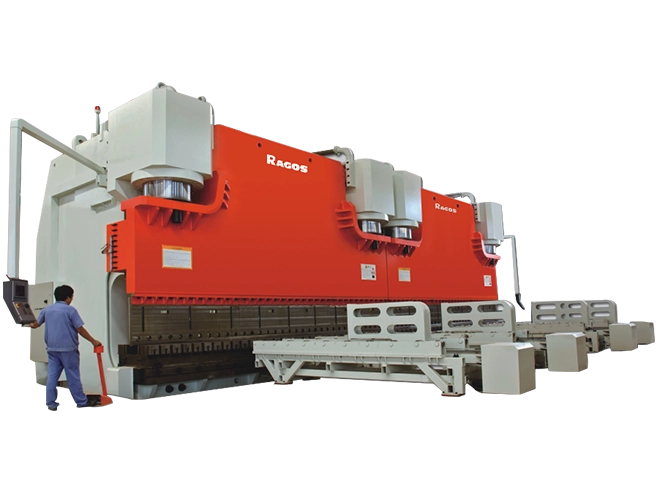
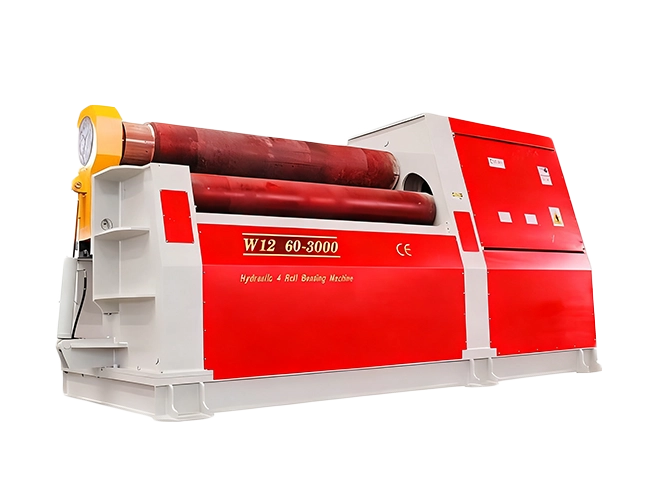
Compensación por coronación — For machines over 2 meters working with automotive structural profiles, hydraulic or mechanical crowning prevents the center of the bend from opening wider than the ends. For large-profile structural work, see the specs on hydraulic press brakes in the 600T–3000T range.
Repeatability of ±0.01 mm or better — Automotive assembly lines have zero tolerance for parts that vary batch to batch. Machines with linear encoders on the Y-axis deliver this consistency.
Bending and approach speed — Fast approach speed reduces cycle time across high-volume runs. For automotive bracket production at 300+ bends per shift, even 1–2 seconds per cycle saved adds up to real output gains.
Automation and Robotic Integration in Automotive Bending
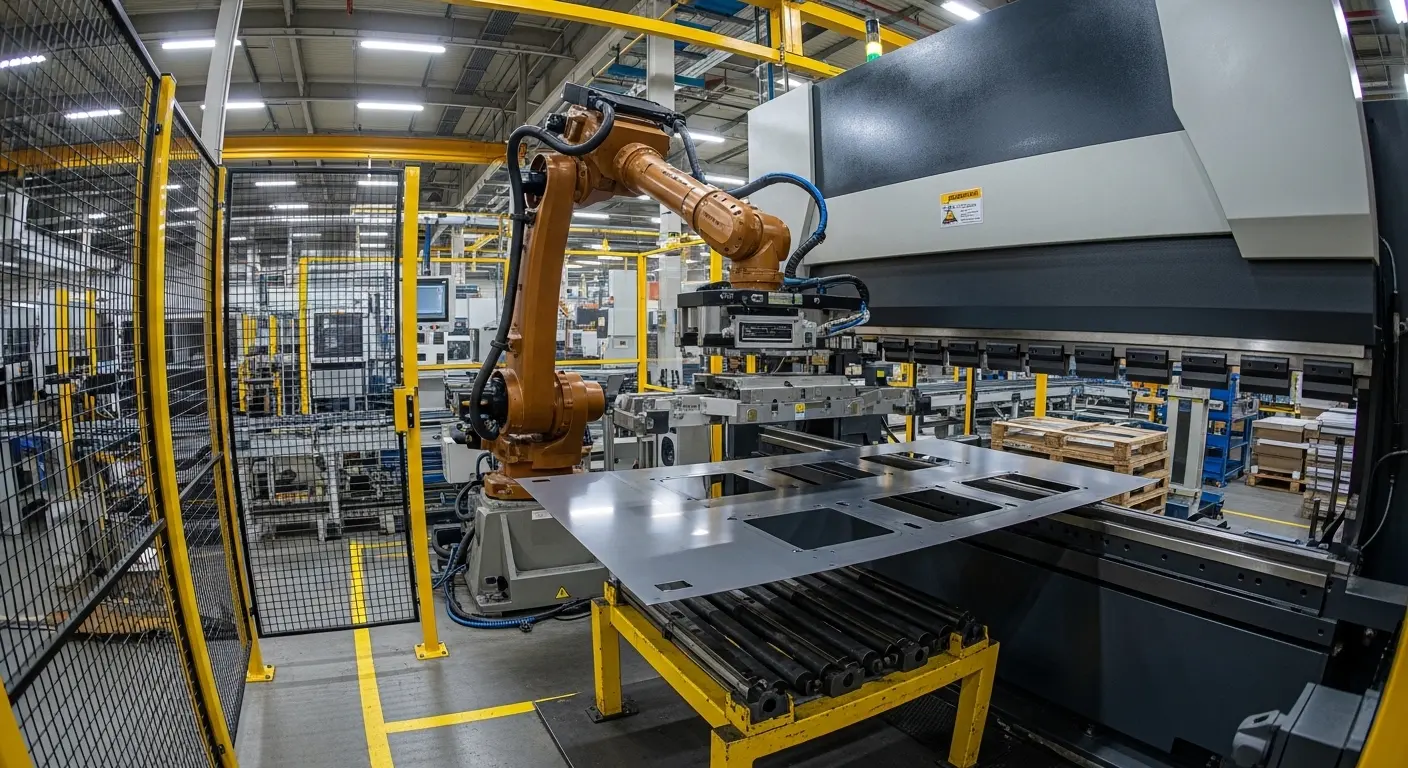
Standalone manual press brakes are rare in serious automotive production. Alto volumen, repeatable bending requires automation — and an automotive sheet metal bending machine needs to fit into that automated workflow.
Modern automotive bending lines typically integrate:
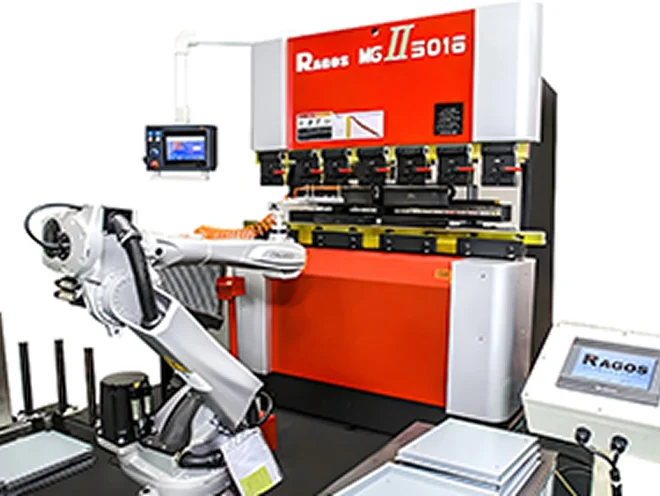
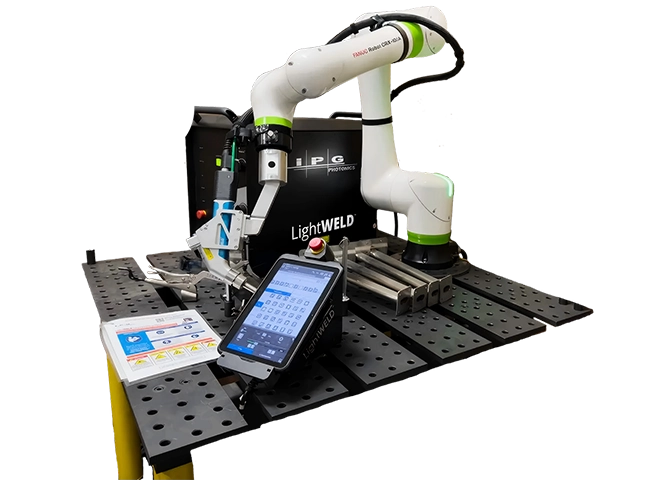
Robotic loading and unloading — A 6-axis robot arm loads blanks onto the press brake, positions them against the back gauge, and removes bent parts. This eliminates operator fatigue and positioning variation across long shifts.
Automatic tool change systems — Premium machines include tool storage and automatic punch/die exchange, allowing multi-stage jobs to run without operator intervention between setups.
Vision and angle measurement systems — Inline angle measurement using laser sensors or camera-based systems confirms every bend angle before the part moves to the next station. Defects are caught in real time, not at final inspection.
MES and ERP connectivity — Automotive OEM suppliers must track production data. Machines with Ethernet connectivity and CNC data export capabilities integrate directly with factory management systems for traceability.
For shops sourcing equipment as an Proveedor internacional de frenos de presión CNC or evaluating the full range of sheet metal forming solutions for automotive production, automation compatibility is a specification to confirm before purchase.
How to Choose the Right Automotive Sheet Metal Bending Machine
Use this five-step framework to narrow your selection before speaking to any supplier.
Escalón 1: Define your thickest, Material más difícil
AHSS at 3 mm sets a very different tonnage requirement than mild steel at 3 mm. Start with your worst-case material — that determines your minimum machine tonnage.
Escalón 2: Identify your longest bend
The bed length must exceed your widest part by a safe margin. Crowning becomes mandatory above 2 meters on most materials.
Escalón 3: Map your bend complexity
Count the maximum number of bends per part and identify whether any require back gauge repositioning mid-sequence. Complex parts need 6-axis control and a 3D graphical controller.
Escalón 4: Set your volume requirement
High-volume automotive production (500+ parts per shift) justifies robotic automation. Lower-volume prototype or Tier-3 work runs well on a standard 4-axis CNC press brake with a skilled operator.
Escalón 5: Confirm automation and connectivity requirements
Check whether your automotive customer requires data traceability, part-per-machine tracking, or specific communication protocols. Confirm your machine's controller and software can deliver those before ordering.
For shops comparing options across global suppliers, the guide to Principales fabricantes de frenos de prensa en 2026 is a useful starting point for shortlisting reputable builders.
Frequently Asked Questions About Automotive Sheet Metal Bending Machines
What is an automotive sheet metal bending machine?
An automotive sheet metal bending machine is a CNC press brake or panel bender used to form flat metal sheet into precise angled components for vehicle manufacturing — including body panels, Ménsulas estructurales, chassis parts, and battery enclosures. It uses a punch and die set to bend metal to specified angles and radii.
What materials do automotive sheet metal bending machines work with?
They work with mild steel, Advanced High-Strength Steel (AHSS), Aleaciones de aluminio (5xxx and 6xxx series), Acero galvanizado, y acero inoxidable. Each material requires different tonnage settings, Selección de herramientas, and spring-back compensation programming.
How much tonnage do I need for automotive sheet metal bending?
For mild steel up to 3 mm, a 100-ton machine typically covers most bracket and frame work. For AHSS or thicker structural components, 160–300 tons is a common requirement. Always add a 20–30% capacity margin above your calculated maximum bending force.
What is the difference between a press brake and a panel bender for automotive use?
A press brake is a versatile machine suited for complex multi-bend parts, Soportes, y marcos. A panel bender is an automated machine optimized for high-speed production of large flat panels like door skins and body panels. Automotive shops often run both types for different part families.
Can a CNC press brake integrate with automotive production line robots?
Sí. Modern CNC press brakes with Delem or similar controllers support robotic integration through digital I/O, fieldbus communication, and teach-mode programming. The press brake and robot work in a synchronized loop — the robot loads and unloads while the CNC controller manages bending sequences automatically.